Summer Road Trip Safety Checklist: 10 Things to Check Before Driving Long Distances in Australia
Summer is one of the most popular times for Australians to hit the road. From coastal getaways along the Great Ocean Road to camping adventures in regional Victoria, caravan holidays and interstate family trips, there’s no shortage of places to visit.
But before packing the car and heading off, it’s important to make sure your vehicle is ready for the journey.
Australia’s summer conditions can be demanding on vehicles. High temperatures, long stretches of highway, heavy holiday traffic and fully loaded cars can place additional stress on tyres, cooling systems, batteries and other essential components.
A little preparation before departure can help reduce the risk of breakdowns, improve driving comfort and make your journey safer.
Whether you’re planning a weekend escape or a two-week road trip, this summer road trip safety checklist covers 10 important things every Australian driver should check before travelling long distances.
1. Check Your Tyres Before Leaving
Your tyres are among the most important components to inspect before a long-distance journey.
Worn tyres, incorrect pressure or existing damage can affect vehicle handling, braking and overall road safety.
During summer, tyre temperatures naturally increase as you drive, particularly when travelling at highway speeds or carrying additional weight.
What Should You Check?
Before your trip, inspect all tyres, including the spare if your vehicle has one.
- Tyre pressure: Check pressures when the tyres are cold and adjust them according to the vehicle manufacturer’s recommendations for your expected load.
- Tread depth: Ensure your tyres meet the legal minimum tread depth and have sufficient tread for the conditions.
- Visible damage: Look for cracks, cuts, bulges, embedded objects or unusual wear patterns.
- Tyre age: Check the condition of older tyres, even if they still have reasonable tread.
- Spare tyre: Confirm that your spare is properly inflated and that the required changing equipment is available.
In Australia, passenger vehicle tyres generally require at least 1.5 mm of tread depth across the applicable tread area. However, replacing tyres before they reach the legal minimum may be advisable, particularly for wet-weather driving.
Don’t Forget Vehicle Loading
If you’re travelling with passengers, luggage, camping equipment or a roof rack, your vehicle may require different tyre pressures from those used during everyday commuting.
Check the tyre placard, usually located inside the driver’s door opening, and follow the manufacturer’s guidance.
Road trip tip: Check tyre pressures before driving, preferably in the morning when the tyres are cold. Don’t release air from hot tyres simply because the pressure has increased during normal driving.
2. Monitor Tyre Pressure Throughout Your Journey
Checking tyre pressure before departure is essential, but tyre conditions can change during a long journey.
A slow puncture, damaged valve or other issue may cause pressure to drop while you’re travelling.
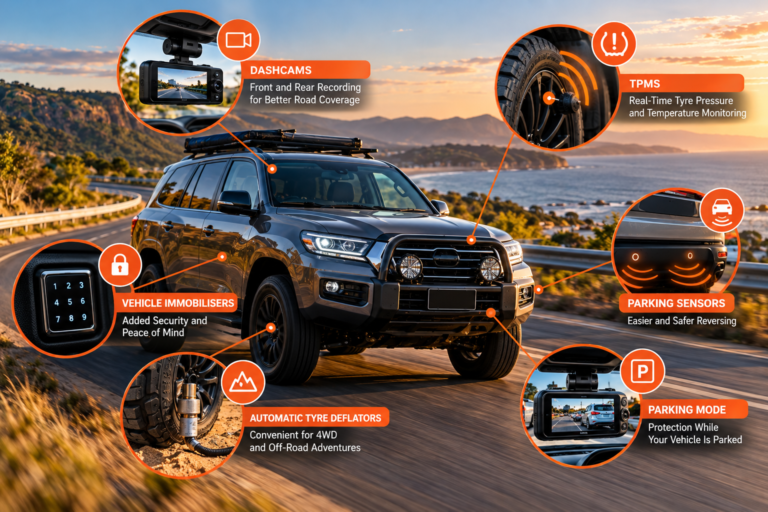
This is where a Tyre Pressure Monitoring System (TPMS) can provide additional awareness.
How Can TPMS Help During Summer Travel?
A TPMS uses sensors to monitor tyre conditions and communicate information to a display or compatible monitoring device.
Depending on the system, drivers can monitor:
- Individual tyre pressure readings.
- Tyre temperature.
- Pressure changes while driving.
- Alerts when readings move outside configured limits.
For example, if a tyre begins losing pressure during a highway journey, a compatible TPMS may provide an early warning before the issue becomes visually obvious.
Particularly Useful for Caravans and 4WDs
Drivers towing caravans or trailers often have additional tyres that are difficult to inspect while travelling.
A TPMS designed for towing can help monitor these tyres alongside those on the tow vehicle.
ParkPro offers a range of Tyre Pressure Monitoring Systems suitable for different driving and touring requirements.
The iCheck IC010 TPMS is one option for 4WD and caravan owners, featuring multiple external sensors, tyre pressure and temperature monitoring, and a solar-powered display.
Remember that TPMS complements regular tyre inspections and does not replace them.
Road trip tip: If your TPMS alerts you to a significant pressure or temperature problem, find a safe place to stop and inspect the affected tyre.
3. Inspect Your Engine Oil, Coolant and Other Fluids
Long-distance driving can place additional demands on your engine and cooling system, especially during hot Australian summers.
Before leaving, check that your vehicle’s essential fluids are at the appropriate levels and that there are no obvious leaks.
Engine Oil
Engine oil lubricates moving engine components and helps manage heat and wear.
Check the oil level using the procedure recommended in your owner’s manual.
If your vehicle is approaching its scheduled service interval, consider arranging servicing before your road trip.
Engine Coolant
Your cooling system helps maintain the engine’s operating temperature.
Check the coolant level when the engine is cold and inspect the reservoir for signs of leakage or contamination.
Never remove a pressurised radiator cap while the engine is hot, as escaping coolant or steam can cause serious burns.
Brake Fluid
Brake fluid is essential for hydraulic braking systems.
If the fluid level is low, the brake warning light is illuminated or the brake pedal feels unusual, have the vehicle inspected by a qualified mechanic.
Windscreen Washer Fluid
Summer travel often means insects, dust and road grime accumulating on the windscreen.
Top up your washer reservoir with an appropriate cleaning solution and ensure the washer jets work correctly.
Road trip tip: If you notice overheating, unexplained fluid loss or warning lights, arrange a professional inspection before travelling.
4. Check Your Battery and Electrical System
A flat battery can quickly turn an enjoyable holiday into an inconvenient roadside delay.
Vehicle batteries can deteriorate over time, and high temperatures may accelerate certain forms of battery ageing.
Before a long trip, inspect your battery and electrical system for signs of trouble.
Common Warning Signs
- The engine cranks slowly when starting.
- Headlights appear unusually dim.
- The battery warning light remains illuminated.
- Electrical accessories behave inconsistently.
- Battery terminals show corrosion.
- The battery is approaching the end of its expected service life.
If your battery has shown any of these symptoms, arrange a professional battery and charging-system test.
Don’t Overlook Accessories
Dashcams, phone chargers, portable fridges and other electrical equipment can increase demand on your vehicle’s electrical system.
If you’re using a dashcam with parking recording, make sure its power arrangement includes appropriate battery protection.
Road trip tip: Carry suitable emergency contact details or roadside assistance information in case your vehicle fails to start.
5. Make Sure Your Dashcam Is Ready for the Journey
A dashcam can be a useful addition to your summer road trip preparation.
While it cannot prevent an accident, it can provide a video record of events occurring during your journey.
This may be helpful when reviewing an unexpected incident or providing relevant footage to an insurer.
Why Consider a Front and Rear Dashcam?
A front-facing dashcam records traffic ahead of your vehicle.
A dual-channel system adds rear-facing coverage, capturing another perspective of the road.
This can be particularly useful during:
- Heavy holiday traffic.
- Highway driving.
- Unexpected braking incidents.
- Lane-changing disputes.
- Certain parking incidents.
Features Worth Considering
When choosing a dashcam for Australian conditions, look beyond resolution alone.
Important features may include:
High-Resolution Recording: 4K and 2K recording options can capture useful detail, depending on the camera’s overall image quality.
Night Vision: Quality image sensors and suitable low-light processing can improve recording performance after sunset.
HDR Technology: Helps balance areas of bright and dark lighting, such as headlights and shadows.
GPS and Wi-Fi: Can provide convenient access to footage and additional journey information on compatible models.
Parking Mode: Allows certain dashcams to monitor events while the vehicle is parked, subject to power and installation requirements.
Check Your Dashcam Before Departure
Even if you already own a dashcam, take a few minutes to:
- Clean the camera lens.
- Check the recording angle.
- Confirm that the memory card is functioning correctly.
- Review a sample recording.
- Check the date and time settings.
- Confirm that the rear camera is working, if fitted.
ParkPro stocks a range of VUEROID dashcams, including front and rear systems designed for drivers seeking advanced recording technology.
Road trip tip: High-resolution dashcam footage can use substantial storage space. Use a compatible memory card and confirm that loop recording is working before your journey.
6. Inspect Your Brakes, Lights and Windscreen Wipers
Reliable braking, clear visibility and properly functioning lights are essential for safe driving.
These components deserve attention before any long-distance journey.
Brake System
Your brakes should respond smoothly and consistently.
Warning signs of potential problems include:
- Squealing or grinding noises.
- Vibrations when braking.
- A soft or spongy brake pedal.
- The vehicle pulling to one side.
- Increased stopping distance.
If you notice any unusual behaviour, have the brakes inspected before departure.
Exterior Lights
Check that your headlights, brake lights, indicators, tail lights and reversing lights are operating correctly.
If you’re towing a trailer or caravan, inspect its lights as well.
Windscreen and Wipers
Summer storms can produce sudden heavy rainfall, making visibility particularly important.
Inspect your windscreen for cracks or chips and replace worn wiper blades if they leave streaks or fail to clear water effectively.
Road trip tip: Ask someone to help you check brake lights and indicators before leaving.
7. Prepare Your Vehicle for Hot Australian Weather
Summer temperatures across Australia can vary significantly depending on where you’re travelling.
Coastal destinations may experience relatively mild conditions, while inland and regional areas can become extremely hot.
Preparing for heat is important for both vehicle reliability and passenger comfort.
Check Your Air Conditioning
Make sure your air conditioning is cooling effectively before departure.
If cooling performance is poor or you notice unusual noises, arrange an inspection.
Inspect the Cooling System
Ensure your vehicle’s cooling system is in good condition, particularly if you’re planning to tow a caravan or drive through hot regional areas.
Carry Drinking Water
Keep sufficient drinking water available for all passengers.
For remote journeys, carry additional supplies in case of delays or breakdowns.
Protect Passengers From Heat
Use suitable sun protection, plan rest stops and avoid leaving children or pets unattended in a parked vehicle.
Temperatures inside a stationary car can rise rapidly, even when the outside temperature does not seem extreme.
Plan Around Extreme Weather
Before travelling, check weather forecasts, fire danger ratings and relevant road conditions.
Bushfires, flooding and severe storms can affect regional roads and travel plans.
Road trip tip: If extreme heat or severe weather is forecast, consider adjusting your departure time or route.
8. Check Your Caravan or Trailer Before Towing
Towing a caravan or trailer introduces additional responsibilities.
The extra weight and length of your vehicle combination can affect acceleration, braking, turning and stability.
Before travelling, check that both the tow vehicle and trailer are suitable for the planned load.
Important Towing Checks
Tyres: Inspect tyre condition, pressure, load rating and age.
Coupling: Confirm that the trailer coupling is properly connected and secured.
Safety Chains: Check that chains are correctly attached according to the applicable requirements.
Electrical Connections: Test trailer lights and relevant electrical systems.
Brakes: Ensure trailer brakes and any required breakaway system operate correctly.
Load Distribution: Secure luggage and equipment, and follow the vehicle and trailer manufacturers’ loading guidance.
Weight Limits: Check applicable towing capacity, towball download, gross vehicle mass and combination mass limits.
Monitoring Caravan Tyres
Caravan tyres can be difficult to observe from the driver’s seat.
A suitable TPMS can help drivers monitor tyre pressure and temperature during longer towing journeys.
For larger towing combinations, a compatible TPMS signal booster may help maintain communication between the trailer sensors and the display.
ParkPro offers an iCheck TPMS Signal Booster for compatible NEXTGEN iCheck systems.
Road trip tip: Allow additional braking distance, avoid sudden manoeuvres and take extra care when descending steep roads with a loaded trailer.
9. Pack Essential Emergency and Roadside Equipment
Even a well-maintained vehicle can experience an unexpected problem.
Having suitable emergency equipment can make roadside situations easier to manage.
What Should You Carry?
Consider including the following items in your road trip kit:
- A well-stocked first aid kit.
- Drinking water and non-perishable snacks.
- A torch with working batteries.
- A charged mobile phone and suitable charging cable.
- A portable power bank.
- A reflective safety vest.
- An appropriate warning triangle where safe and permitted to use.
- Spare tyre equipment or the manufacturer’s tyre repair kit.
- A tyre pressure gauge.
- Basic emergency supplies suitable for your destination.
- Roadside assistance and emergency contact information.
For remote travel, additional equipment may be necessary, including appropriate communications devices, recovery equipment and extra water.
Know What to Do During a Breakdown
If your vehicle develops a problem, move to a safe location where possible.
Avoid stopping in a live traffic lane unless the vehicle cannot be moved.
Turn on hazard lights when appropriate and follow local road safety guidance.
If you are on a high-speed road, consider whether remaining in the vehicle or moving to a protected area is safer, depending on the circumstances.
Call roadside assistance when necessary.
In Australia, dial 000 for police, fire or ambulance assistance in an emergency.
Road trip tip: Mobile coverage can be limited in regional Australia. Download offline maps and plan your communication options before travelling to remote areas.
10. Plan Rest Stops and Avoid Driver Fatigue
Driver fatigue is a major road safety concern, particularly during long-distance holiday travel.
Early departures, unfamiliar roads, long hours behind the wheel and insufficient sleep can all increase the risk of fatigue.
Signs You May Be Getting Tired
Common warning signs include:
- Frequent yawning.
- Difficulty concentrating.
- Heavy eyelids.
- Missing road signs or exits.
- Drifting within your lane.
- Difficulty remembering recent sections of the journey.
If you notice these symptoms, stop somewhere safe and rest.
Plan Your Journey Before Leaving
Allow enough time to reach your destination without rushing.
A common road safety recommendation is to take a break of at least 15 minutes approximately every two hours, although you should stop sooner whenever you feel tired.
Consider sharing driving responsibilities with another licensed driver where possible.
Avoid Driving When You Would Normally Be Asleep
Driving late at night or very early in the morning can increase fatigue risk, particularly if these times overlap with your normal sleeping hours.
Don’t Rely on Quick Fixes
Opening windows, turning up the music or consuming caffeine may provide temporary stimulation, but they are not substitutes for adequate sleep.
If you’re too tired to drive safely, stop and arrange proper rest.
Road trip tip: Build breaks into your itinerary before leaving rather than waiting until you’re already exhausted.
Quick Summer Road Trip Safety Checklist
Before starting your next long-distance drive, use this checklist to make sure you’ve covered the essentials.
| Safety Check | What to Confirm |
|---|---|
| 1. Tyres | Correct cold pressure, adequate tread, no visible damage |
| 2. TPMS | Sensors connected, readings visible, alerts configured |
| 3. Vehicle Fluids | Engine oil, coolant, brake fluid and washer fluid checked |
| 4. Battery | Battery and charging system operating correctly |
| 5. Dashcam | Camera recording, lens clean, memory card functioning |
| 6. Brakes and Lights | Brakes, headlights, indicators and wipers working |
| 7. Summer Preparation | Air conditioning, drinking water and weather planning |
| 8. Caravan or Trailer | Coupling, brakes, tyres, lights and load limits checked |
| 9. Emergency Kit | First aid, communication devices and roadside equipment packed |
| 10. Driver Fatigue | Rest stops planned and adequate sleep arranged |
Save this checklist before your next holiday and review it whenever you’re preparing for a longer journey.
Frequently Asked Questions About Summer Road Trip Safety
How do I prepare my car for a long road trip in Australia?
Start by checking tyre pressure and condition, vehicle fluids, brakes, lights, battery and cooling system. Make sure your vehicle is serviced according to the manufacturer’s schedule, pack suitable emergency equipment and plan rest stops.
If you’re towing, check the additional weight limits, tyres, brakes and trailer connections.
Should I increase my tyre pressure for a long highway trip?
Tyre pressures should follow the vehicle manufacturer’s recommendations for your tyre size, expected load and driving conditions.
Some vehicles specify different pressures for heavily loaded or sustained highway driving.
Always check the tyre placard or owner’s manual rather than increasing pressure arbitrarily.
Is a tyre pressure monitoring system worth having for road trips?
A TPMS can be particularly useful for long-distance travel, caravans and towing because it provides tyre pressure information while driving.
It may alert you to pressure changes that would otherwise be difficult to notice.
However, it does not replace regular tyre inspections or correct tyre maintenance.
Do I need a dashcam for long-distance driving?
A dashcam is not generally a legal requirement for private motorists in Australia, but it can provide useful footage of road incidents.
Front and rear dashcams offer additional recording coverage, while models with advanced night vision may be helpful for drivers who frequently travel after dark.
What should I do if my car overheats during summer?
If the engine temperature warning appears or the vehicle begins overheating, find a safe place to stop as soon as practical.
Follow your vehicle manufacturer’s instructions and allow the engine to cool.
Do not remove the radiator cap while the cooling system is hot.
Seek roadside assistance if you cannot identify and safely resolve the issue.
How often should I stop during a long road trip?
A useful general guideline is to take a break of at least 15 minutes every two hours.
However, drivers should stop earlier if they feel tired, lose concentration or notice other signs of fatigue.
Adequate sleep before travelling is equally important.
What extra checks are needed when towing a caravan?
Inspect caravan tyres, wheel condition, brakes, coupling, safety chains, electrical connections and load distribution.
Confirm that your vehicle and caravan combination complies with applicable towing and weight limits.
A compatible TPMS may also provide additional tyre monitoring during the journey.
Final Thoughts: Make Safety Part of Your Summer Road Trip Plans
Australia offers some incredible summer road trip destinations, from coastal highways and national parks to regional towns and remote touring routes.
But a successful journey begins before you leave the driveway.
Checking your tyres, vehicle fluids, brakes, battery and cooling system can help reduce the likelihood of unexpected mechanical problems.
Preparing for hot weather, carrying emergency supplies and managing driver fatigue are equally important.
Modern automotive accessories can also provide additional information and recording capabilities during your journey.
A quality dashcam can document road incidents, while a TPMS helps drivers monitor tyre pressure and temperature throughout longer trips.
At ParkPro, we offer automotive safety products designed to support Australian drivers, including premium VUEROID dashcams and iCheck tyre pressure monitoring systems.
Get your vehicle ready for the road ahead.
Browse our range of automotive safety products:
Dashcams: https://parkpro.com.au/product-category/dashcam/
Tyre Pressure Monitoring Systems: https://parkpro.com.au/product-category/tpms/
ParkPro Online Store: https://parkpro.com.au/
A little preparation today can help make your next summer road trip safer, more comfortable and more enjoyable.